

Selling Your House Yourself on Facebook? Read This Before You Post ‘For Sale By Owner’ in North Devon
Selling Your House Yourself on Facebook? Read This Before You Post ‘For Sale By Owner’ in North Devon
Can you sell your house yourself on Facebook? Absolutely.
You don’t have to use an estate agent to sell a property in England or Wales.
You can photograph it yourself, put it into a local Facebook group, arrange your own viewings, negotiate directly with buyers and potentially save yourself an estate agency fee.
Simple.
Well… sort of.
Because there’s quite a big difference between advertising a house and successfully selling one.
Putting six photographs on Facebook and writing “3 bed house for sale, £425k, PM me” is certainly advertising. It is not necessarily a particularly good strategy for handling what may be the largest financial transaction of your life.
So, if you’re considering selling your home yourself, I’m not going to tell you not to.
Instead, here’s what I’d want you to know before you start.

First things first: work out what your house is actually worth
This sounds obvious. It isn’t.
One of the biggest problems private sellers face is exactly the same problem estate agents face: the owner has an emotional relationship with the property. The buyer doesn’t.
You remember what you paid for the kitchen. The buyer just thinks it’s brown.
You know the garden took seven years to create. The buyer wonders where they’ll put a trampoline.
And unfortunately, neither your mortgage balance, what you need for your next house nor what Dave three doors down says his house is worth determines the market value.
Before advertising, research actual comparable sold prices, rather than relying entirely on asking prices.
There is an important difference.
A house advertised for £600,000 tells you what its owner hopes it is worth.
A comparable house that completed for £550,000 tells you what a buyer was actually prepared to pay.
Get several professional valuations if necessary and ask agents to show you the evidence behind their figures.
Then decide on a pricing strategy. Not simply a number.
Those are two different things.

Prepare before you advertise
One of the great temptations with Facebook is its immediacy.
Take photos Saturday morning.
Write advert Saturday lunchtime.
Spend Saturday afternoon answering 47 versions of:
“Is this still available?”
Resist the temptation. Once your property enters the public domain, buyers start forming opinions about it.
So get everything ready first.

Get your paperwork together
Before marketing, start gathering the documents a buyer and their solicitor are eventually going to want.
Depending upon the property, this could include:
- title information
- whether the property is freehold or leasehold
- planning permissions
- Building Regulations approvals
- FENSA or CERTASS certificates
- warranties and guarantees
- information about extensions and alterations
- electrical documentation
- Party Wall Agreements
- lease and service-charge information
- information concerning rights of way or access
- septic tank/private drainage information where applicable
- details of disputes, boundaries or other relevant issues
The government’s selling guidance specifically recommends gathering this information before going to market. And if you know there’s something unusual about the property, now is a very good time to speak to your solicitor about it.
Finding out that the conservatory doesn’t have the paperwork everyone assumed existed is considerably less stressful before you find a buyer than twelve weeks into a transaction.

Instruct your solicitor early
This is one of my favourite pieces of advice for any seller.
Don’t wait until you’ve agreed a sale before finding a conveyancer.
Instruct them early.
They can start getting the title and paperwork organised while you’re marketing.
The government guidance actually recommends considering this because title or information problems can potentially be resolved before a buyer is found.
You’ll eventually be completing forms such as the Property Information Form (TA6), the TA10 Fixtures and Fittings Form and, for leasehold properties, additional leasehold information.
So get ahead.
There is no prize for discovering a title problem three days before exchange.
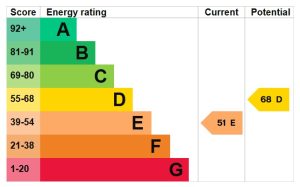
Don’t forget the EPC
This one isn’t optional.
If your property requires an Energy Performance Certificate, you must order the EPC before you market the property.
EPCs are normally valid for ten years, so check whether yours already has a valid certificate before paying for another one.
Being a private seller doesn’t magically make this requirement disappear.
Check if your has one and its still valid here: https://www.gov.uk/find-energy-certificate

Now prepare the house
Here’s another misconception.
“I’m selling privately, so I don’t need all the fancy estate-agent stuff.”
The buyer doesn’t care who’s selling it. They still compare your house with everything else available.
And your competition may have professional photography, floorplans, video, beautifully prepared rooms and carefully written marketing.
You’re competing with that.
So before taking photographs:
- Declutter.
- Clean.
- Deal with obvious maintenance.
- Tidy the garden.
- Hide the wheelie bins.
- Remove the washing from the radiator.
- Put the toilet seat down.
- And perhaps reconsider the photograph featuring your reflection in the bathroom mirror wearing your dressing gown.
You are trying to make someone stop scrolling and think:
“I’d like to live there.”

Photographs matter. A lot.
Facebook is a visual platform. People scroll.
Your first photograph has perhaps a second or two to make someone stop. So:
- Choose your strongest image first.
- Take photographs in good daylight.
- Open curtains and blinds.
- Turn lights on where appropriate.
- Keep rooms tidy.
- Show enough of the property for buyers to understand it.
And please resist the urge to use a super-wide lens that makes your 11ft sitting room look like an aircraft hangar.
To make the right impression we always advise investing in professional photography because its money well spent in the end. If you are in North Devon check out our favourite property photographer Alex here : https://www.alexandrastapletonpropertyphotography.co.uk/
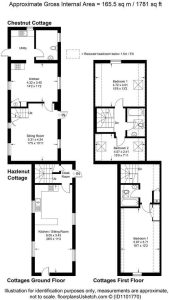
A floorplan is worth having
Buyers don’t simply buy decoration.
They buy space and how that space works for them.
A decent floorplan helps people understand:
- room relationships
- layout
- approximate dimensions
- potential furniture positions
- flexibility
- access
- how the house might work for their family
For unusual properties in particular, this can be incredibly important.
Writing the Facebook advert
This is where things get interesting.
You need enough information for someone to make an informed decision about whether the property might suit them.
At the very least, think about communicating clearly:
- Price
- Location
- Property type
- Number of bedrooms/bathrooms
- Tenure
- Parking/garage
- Garden/land
- Important features
- EPC
- Any significant issue or characteristic a buyer ought reasonably to know about
For leasehold property, things such as lease length, service charges and ground rent can be extremely important to buyers.
For rural property, private drainage, water supplies, access and rights of way may matter.
For unusual construction, restrictions or other significant issues, don’t simply hope nobody asks.
Professional estate agents now operate within increasingly significant requirements concerning material information — information a buyer needs in order to make an informed decision. The government is continuing work on specific guidance for property professionals in this area.
A private homeowner isn’t automatically subject to every obligation that applies to an estate agent acting as a professional trader.
But the principle is still an excellent one:
Don’t mislead people. Don’t invent things. Don’t conceal something significant because you think mentioning it might put buyers off.
If you’re unsure whether something should be disclosed, speak to your solicitor.

Sell the lifestyle, not just the bricks
Being accurate doesn’t mean your advert needs to read like a surveyor’s report.
People buy homes emotionally as well as logically.
Instead of:
“Rear garden approximately 70ft.” Tell them what that garden actually offers.
- Morning sun?
- Room for children?
- Space for dogs?
- Vegetable beds?
- Entertaining?
- Privacy?
- Potential studio?
- A walk to the beach?
- Schools nearby?
- Countryside from the doorstep?
Good property marketing should help the right person imagine their life in your home.
Facts establish suitability. Emotion creates desire and urgency.
You need them all.

Then Facebook happens…
You’ve pressed POST. Congratulations.
Your house is officially on the internet.
You may now encounter several fascinating species of Facebook buyer.
There’s:
“Is this available?” Followed by complete radio silence.
“What’s your lowest price?” Before they’ve even established which village it’s in.
“Would you take £300k cash?” On your £475,000 house.
And my personal favourite:
“It’s sounds like just what we have been looking for” Except they need to sell their house and haven’t even had it valued yet, but of course, houses sell very fast in their area and theirs is the best one one the street.
None of these people is necessarily your buyer. Your job now is to separate Facebook interest from Real World intent.

Qualify buyers BEFORE inviting them into your home
This is hugely important!!!
You’re not selling a sofa. You’re giving strangers your address and inviting them inside your home. ( Please note people can and will do an internet search on your name and area and find ANY information there is about you. If you have your name and/or business linked to your home address and anything you may have put online before, good or bad!)
Before arranging a viewing, I’d want to know:
- full name
- telephone number
- home address
- email address
- where they’re currently living i.e. in rented, with relatives
- whether they have a property to sell
- whether that property is on the market
- whether it is under offer
- whether they require a mortgage
- whether they have an ‘Agreement in Principle’ for their mortgage
- whether they’re a cash buyer
- their desired timescale
- who will actually be attending the viewing
A genuine buyer should understand why you’re asking.
Someone refusing to provide even basic information before entering your home would make me cautious. In fact we refuse viewings from buyers if they wont at least provide their contact number and home address. We also refuse viewings from buyers who aren’t at least on the market themselves, if they need to sell this in order to buy.
Facebook itself recommends caution when meeting people through Marketplace and warns users about sharing personal information and suspicious activity.
Selling a property inevitably requires giving people your address, which makes sensible screening even more important.
Viewing security
- Don’t conduct viewings alone if you can avoid it.
- Tell somebody who’s coming and when.
- Keep valuables, financial documents, passports, keys and medication out of sight.
- Don’t casually explain your alarm system.
- Don’t tell strangers exactly when you’re going away for three weeks.
- Keep a record of everyone who views and when.
- And if something feels wrong, don’t arrange the appointment.
Conducting the viewing
Here’s where private sellers sometimes have an advantage.
Nobody knows your home better than you.
You know where the evening sun lands.
You know the neighbour is lovely.
You know which pub does the best Sunday lunch.
You know the shortcut to school.
That’s valuable. But there’s a downside.
You love the house. The buyer may not.
Give them space.
Don’t follow them six inches behind explaining every light fitting.
Don’t take criticism personally.
And don’t accidentally negotiate against yourself.
Buyer:
“We really like it, although we’d probably change the kitchen.”
Seller:
“Oh yes, absolutely. We’d probably take £15,000 less because of that.”
Buyer:
“Excellent.”

The buyer makes an offer. What now?
This is where private selling becomes considerably more serious.
Imagine you advertise at £500,000 and receive:
Buyer A — £485,000 cash
Buyer B — £500,000 with a property to sell
Buyer C — £495,000, property sold, mortgage agreed in principle
Which is best?
There isn’t enough information.
The highest offer isn’t necessarily the best buyer.
You need to establish:
- their financial position
- whether cash funds can be evidenced
- mortgage requirements
- whether they have a related sale
- how advanced that sale is
- the length and strength of the chain
- desired completion date
- any conditions attached to the offer
Only then can you sensibly assess it.
Negotiating the price
Try to separate emotion from negotiation.
The buyer isn’t insulting your children because they offered £20,000 below asking price.
They’re negotiating.
You can say no. You can counter. You can ask for their best and final offer. You can have multiple interested parties.
But don’t invent imaginary offers or create false competition.
Negotiate based upon the strength of your position and theirs.
And remember:
£15,000 more from a buyer who cannot proceed isn’t necessarily worth more than £15,000 less from one who can.
Certainty has value.
Accepting an offer doesn’t mean you’ve sold
This surprises some sellers. In England and Wales, accepting an offer does not normally create a legally binding sale.
Either party can generally withdraw until contracts are exchanged. So when you accept an offer, you’re really entering the next stage.
Now the serious work begins.
You’ll need the buyer’s:
- full details
- solicitor/conveyancer details
- agreed price
- buying position
- mortgage position
- related-sale information
- proposed timescale
Your solicitor can then begin the conveyancing process with the buyer’s solicitor.

What happens during conveyancing?
Your solicitor or conveyancer will deal with the legal transfer of ownership.
The contract needs to cover matters including the price, boundaries, fixtures and fittings, restrictions and rights, services and completion arrangements.
The buyer’s solicitor will investigate the title and raise enquiries.
The buyer may arrange a survey.
Their mortgage lender may arrange a valuation.
Searches will be carried out.
Questions will arrive.
More questions will arrive.
Then a question asking about the answer to the previous question will arrive.
Welcome to conveyancing.
Your job is to respond promptly and accurately.
The survey
A survey isn’t necessarily a disaster. Most houses aren’t perfect. Particularly older ones.
The survey may identify maintenance, defects or recommendations.
The buyer may accept them.
They may investigate further.
Or they may try to renegotiate.
If they do, don’t immediately panic and knock £20,000 off.
Ask:
What exactly has been identified?
Is there evidence?
What is the realistic cost?
Was the issue already reflected in the asking price?
Is this genuinely new information or simply normal maintenance?
Obtain quotations or professional opinions yourself. ( This is really useful to do before you advertise your home if there are issues you are already aware of.)
Negotiation after survey is still negotiation.

Sales progression: the bit nobody sees
Finding a buyer is only half the job.
Now you need to keep the transaction moving. That means maintaining communication with:
- your solicitor
- the buyer
- their solicitor indirectly where appropriate
- mortgage brokers/lenders
- surveyors
- other sellers and agents in the chain
You need to understand what’s outstanding.
- Has the mortgage offer arrived?
- Are searches back?
- Are enquiries answered?
- Is the buyer’s sale progressing?
- What’s happening further down the chain?
- Has everyone agreed a completion date?
This is the glamorous side of property.
Nobody makes an Instagram Reel about chasing a ‘management pack’ for the fourth time.
But it can be the difference between Sale Agreed and Sold.
Exchange and completion
Eventually, everyone’s legal work is completed.
Contracts are agreed.
Dates are negotiated.
You exchange contracts.
Now it becomes legally binding.
Usually neither buyer nor seller can simply walk away after exchange without potentially serious financial consequences.
Then comes completion.
Money is transferred through the solicitors.
Your mortgage is redeemed where applicable.
Ownership transfers.
Keys are released.
You move out.
And somewhere, hopefully, someone opens something fizzy.
One more important warning: are you already using an estate agent?
If you’re currently contracted with an estate agent and decide to advertise your property privately on Facebook, read your agency agreement first.
Seriously.
Don’t assume that finding your own buyer automatically means you won’t owe your agent a fee.
Different agreements have different consequences.
A sole agency agreement and a sole selling rights agreement are not the same thing.
With sole selling rights in particular, you may still become liable for the agent’s fee even where you find the purchaser yourself.
Government guidance specifically tells sellers to check their agency contract and notes that fee liability depends upon the type of agreement, including whether the agent has sole selling rights.
So check first.

So… should you sell your home yourself on Facebook?
Maybe.
For some sellers and some properties, it can work perfectly well.
You might already know your buyer.
You might live somewhere with exceptional local demand.
You may have marketing experience.
You might be confident conducting viewings, negotiating offers and progressing a chain.
And saving an estate agency fee is a perfectly legitimate reason to consider doing it yourself.
But understand what you’re taking on.
Selling your own home isn’t really about putting an advert on Facebook.
You’re becoming your own:
- Valuer.
- Marketing department.
- Photographer.
- Copywriter.
- Enquiry handler.
- Viewing agent.
- Buyer qualifier.
- Negotiator.
- Sales progressor.
The solicitor still handles the legal work, thankfully.
And that’s the point.
A good estate agent’s job was never supposed to be putting your house on a website and waiting for somebody to ring. The job is to create the right strategy, present the property properly, find and qualify buyers, negotiate from a position of knowledge and then keep the transaction together until the keys finally change hands.
If you decide you’re capable of doing all of that yourself, fantastic.
Hopefully this guide helps you do it properly.
And if halfway through your 37th Facebook message asking “Is this still available?” you decide there might be something to this ‘estate agent’ job after all…
Well.
You know where we are.
I’m Nic Chbat, Director of Match Property and Unique and Distinctive Homes in Barnstaple, and for the past 20 years I’ve helped North Devon homeowners make sense of the market, attract the right buyers and achieve the best possible result from their sale.

Book and advice meeting with me HERE
Call for a chat 01271 410108
Email your questions to nic@matchproperty.co.uk